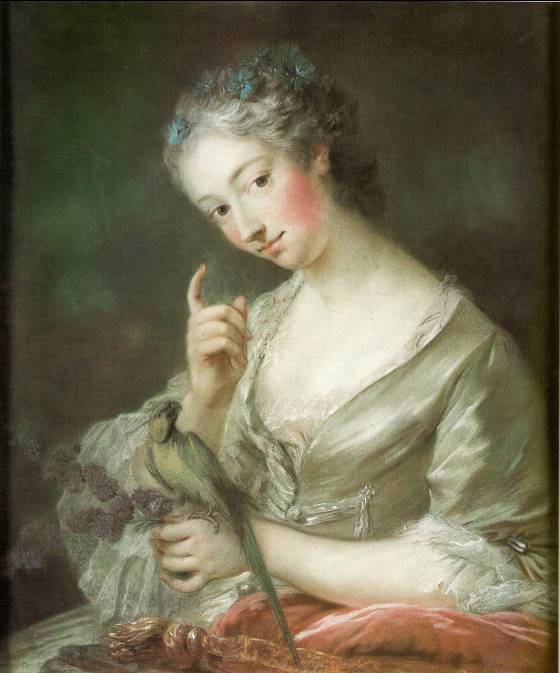
Tuesday, August 31, 2010

We're Back! Happy Birthday Jean Plaidy!!

Eleanor Alice Burford Hibbert (Jean Plaidy, Victoria Holt, Philippa Carr, etc)
September 1, 1906 - January 18, 1993


What is it about Jean Plaidy that has millions of readers so fascinated by her writing? Obvioiusly her prolific style and impeccable historical accuracy are major reasons why so many people love her books- BUT, there’s something more than just that...if you’re hooked on Plaidy like we are here at Plaidy’s Royal Intrigue, you’ll get what I mean...don’t you find that her characters literally come to life...almost like spirits telling their own story? I always get that feeling. It’s almost as though the characters had some private meeting with her where they shared a real heart-to-heart and then Plaidy got privy to writing all about it. Another thing that always seems to amaze me, is that (in my experience) I’ve yet to read a book of hers that I didn’t get totally sucked into-Yes- her books capture my entire attention and set me off to the very time and place-always!

It’s all so mysterious. And while we’re on the topic of mysterious; what about the Plaidy Lady herself...I believe she’s the most mysterious yet! I wish I could come across some bit of biography or tip on how she lived her life- something (besides the only source we have on her so far- read it here) that would shed some light on how she went about her writing and life.

So, Arleigh and I thought how nice if we could honor her Birthday with an improvisation interview (a mock interview if you like;)- Just to get a feeling of what a conversation with her might sound like.

Let’s see..what would Plaidy say...

Let us know if you thimk she waould have said it diffefrently! Join in the fun!

1. Is there a particular period that fascinates you most? Which one and why?

I think it's apparent that I prefer writing based on my own country's history, though I cannot claim a particular favorite era. I enjoy giving voice to the misunderstood and there are very many among the British royalty and nobility who fit into that category.

2. Of all the novels you’ve written, which is your favoirite- why?

I quite enjoyed exonerating both Anne Boleyn and Catherine Howard in Murder Most Royal, before writing their own individual stories in The Lady in the Tower and The Rose Without a Thorn. Henry VIII was a most interesting character to develop owing to his need to quell his conscious yet follow his desires. The careful reader will pick up on my disdain for the man, though I feel I did him justice.

3. Favourite character? Favourite royal?

I heartily enjoyed writing the witticisms and jolly nature of Charles II in my trilogy: The Wandering Prince, A Health Unto His Majesty and Here Lies Our Sovereign Lord. You can also find quips from him in related novels on his wife, brother and nieces. Charles is my favorite royal for his humor, courage and loyalty. He charmed the people, walked among them and helped extinguish the Great Fire with his own hands. He did not discard his wife, though she was barren and Catholic. Oh yes, he was unfaithful, but respectfully so and never did he dishonor her as Queen. He may have been lackadaisical in the political and religious arenas, but we see with his brother, James, how being otherwise cost the throne.

4. Is there any historical figure that you have not written about that you wish you had?

Many, but a writer has to tell the stories that demand to be told. Fifty years of writing is a wonderful gift and I have done with my time as well as I could. I'm sure my readers would have appreciated more novels set on the Continent, but it cannot be denied that the British monarchy is full of tales enough to busy any writer. I did, however, venture from England under my nom de plume Victoria Holt; places such as Italy, Southern France, Australia and the Orient.

5. We know that you typed away diligently at your typewriter on a daily basis. What was your source of inspiration? a particular muse perhaps? And what special advice can you give aspiring historical fiction writers?

I love to travel and discover new places, which leads to fantastical story lines and wonderful characters. I've spent my later years on cruise ships exploring the world, and it's all the muse one needs! As for advice: read as much as you can. Reading is experience. Had I not had so much free time in my youth I do not know if my love of history would have been established.

6. Lastly, Ms. Plaidy is there anything you would like to share with us regarding your private life…(some of us would love to know your favourite colour, if you own a pet, had a best friend…?)

I am not overly fond of animals, except perhaps the exotic birds I have encountered on my travels. Sadly my solitary lifestyle does not afford me the opportunity to confide in any one special person, but I have many friends with whom I correspond regularly. My favourite colour is Royal Blue.

And we end this BIRTHDAY CELEBRATION with a gift to you Plaidy lovers! One brand new Arrow reprint (UK version) of Madonna of the Seven Hills to a lucky winner! This giveaway is open worldwide and ends September 13th.


"In a castle in the mountains outside Rome, Lucrezia Borgia is born into history's most notorious family. Her father, who is to become Pope Alexander VI, receives his first daughter warmly, and her brothers, Cesare and Giovanni, are devoted to her. But on the corrupt and violent streets of the capital the Borgia family is feared, and Lucrezia's father causes scandal, living up to his reputation of 'most carnal man of his age'. As Lucrezia matures into a beautiful young woman, her brothers are ever more protective and become fierce rivals for her attention. Amid glorious celebrations their father becomes Pope, and shortly after Lucrezia is married - but as Borgias the lives of the Pope's children are destined to be marred by scandal and tragedy, and it's a fate that Lucrezia cannot hope to escape."

For those who may be wondering just where in the heck Lucy & Arleigh have been... well, it's been a very busy summer! We plan to be more active so look for new reviews and posts soon! The Jean Plaidy Challenge is still open and the pages will be updated shortly. Thank you all for visiting!

Sunday, June 13, 2010

review: A Favorite of the Queen


A Favorite of the Queen

By Jean Plaidy

Also printed as Gay Lord Robert and Lord Robert

The story begins with Robert Dudley’s father at the execution of his father, Edmund Dudley, who had been used as an example to the people that the new King Henry VIII would please his people. The elder Dudley was Henry VII’s cruel tax collector and as such deserved to die a traitor’s death. John Dudley grew up to regain both his family fortunes and titles, though it was hard-won through battle and diplomacy. He formed the right connections at court, married his children off well and set them on the path to prosperity. Unfortunately for the Dudleys, their reins on the government ended when they supported Lady Jane Grey instead of Mary Tudor on Edward VI’s death.

Elizabeth and Robert met in childhood through the royal children’s classroom. He found her haughty, yet fascinating and she found him too outspoken for someone she deemed beneath her. They next meet at the Tower when each is imprisoned by Queen Mary. Elizabeth is free to walk the grounds and soon finds a way to communicate with Robert, which soothed them both during those perilous months.

As promised, Robert was the first to inform Elizabeth of her sister’s death and she instantly made him Master of the Horse. From here the story is less detailed and moves swiftly through Elizabeth’s reign with Robert at her side. One of the most impressive parts of this novel is the descriptions of Elizabeth’s mindset. For example:

Pages 241-242

“To England the Queen was a symbol. She gathered handsome and chivalrous men about her; they must be gallant and adventurous. She wished to be to them a fair ideal, the mistress they all wished to serve because they were in love with her perfections; yet she was the mother, and their welfare was the clearest concern of her life. She was Woman, warm and human, yet because she was an anointed Queen, she was invulnerable and unassailable. She wanted her men to be bold, to perform feats of courage and adventure for her sake; these she rewarded with her smiles and favors. She was a spiritual mistress; they must be faithful to her; they must perpetually seek to please her, their thoughts of her, must be the words and thoughts of lovers. They must all be in love with her; to them she must be the perfect woman. But they must never forget that she was mistress of them all. And while to her handsome and gallant courtiers, to her statesmen and soldiers, she was the queenly mistress and beloved woman, they must constantly remember that to her people she was Mother—the all-embracing Mother-and her thoughts and her energies were directed toward the good of her people. She wished England to be a happy home for her people—a prosperous home—and as, to her belief no home could be happy and prosperous unless it were peaceful, she abhorred war.”

The book description of the reprint puts emphasis on the death of Robert’s first wife, Amy Dudley, which is understandable even though that particular event was not the basis of the story. Plaidy wrote an Author’s Note to explain her thoughts on the mysterious death and why she came to the conclusion that it was, in fact, a murder arranged by her husband. However, Amy death continues to haunt Robert throughout his life and in this sense Amy’s story is one of the main focuses.

This is not an amazing read for the Tudor expert, or really even the casual historical fiction fan with knowledge of the Elizabethan times. I cannot claim one event from the book was new to me, but then I have also read Queen of This Realm and My Enemy the Queen, which are both detailed reads on Elizabeth, Leicester and Lettice by Jean Plaidy. It was a good refresher, especially with the Queen’s martial issues, foreign relations and much philosophizing on her thoughts and behavior. Overall, I count it as an enjoyable read, but not one of my favorite Plaidy novels.

Sunday, May 30, 2010

Author's Note: A Favorite of the Queen

Jean Plaidy says:

In writing of what is undoubtedly one of history's most puzzling relationships, it is perhaps advisable to add a few remarks in order to justify the conclusions to which I have come. This is particularly the case with regard to the mysterious death of Amy Robsart.

All that happened on that Sunday morning at Cumnor Place will never be known. Was Amy's death due to accident, suicide, or murder? After studying available records my verdict cannot be anything but murder.

Consider the facts: The Queen was being pressed by her ministers to marry. She could not bear to forgo the attentions of Robert Dudley, and Robert could not give up the hope of sharing the throne. Thus Robert's wife Amy stood in the way of the two ruthless personalities. The Queen, in politics the soul of caution, had always been reckless in love. Scandal was circulating throughout the country concerning the relationship of Elizabeth and Robert Dudley. People remembered Thomas Seymour. Before Amy died there was a strong rumor that her death was being planned; and when it was said that Amy was suffering from a fatal malady, many believed that to be a false rumor set in motion to explain the death which was to follow. So persistent were the rumors, that a physician refused to attend Amy, fearing to be accused of administering poison should she die. This was the state of affairs when her minister, Cecil, returning from Edinburgh, found the Queen strained and nervous, and, to his astonishment, heard from her lips that Amy would soon be dead. Cecil, appalled, hurried from the Queen, and was so distraught that, coming face to face with the Spanish ambassador, he could not keep his suspicions to himself. "The Queen and Lord Robert Dudley are scheming to put Lord Robert's wife to death!" is what he said--according to the Spanish ambassador. And a few hours later Amy was found dead.

Why should the Spanish ambassador have written those revealing dispatched if the contents were untrue? Spain was no enemy of Robert's at that time, and Robert had won Philip's approval at St. Quentin.

An accident to Amy resulting in her death at such a time so convenient to Elizabeth and Robert is surely too incredible a coincidence to be accepted.

As for the suggestion of suicide, if Amy had wished to kill herself would she have chosen a method which, she must have known, might not result in death, but merely add acute pain and misery to her remaining years? Would any woman destroy herself in such a painful way in order to avoid being murdered?

Everything points to murder, apart from Amy's strange conduct on that Sunday morning in sending all her servants to the Fair. Why did she--in perpetual fear of murderers--clear the house of all the servants on that day which was to prove so tragic to her?

I have looked to her maid Pinto for the explanation, because from her first came the suggestion of suicide. It seemed that this suggestion came simply and unwittingly from Amy's maid; but was Pinto such a simpleton? What if the suggestion were not rung from her, but deliberately given? Might she not have known the true reason why the house was deserted on that Sunday morning? Let us consider what a woman would do when the whole country was hinting that she was about to be murdered. How would a devoted maid behave? As for my interpretation of Pinto's feelings for Robert, it must be remembered that, during his two and a half years' exile, he had lived in Norfolk and would have come into continual contact with Pinto; and if we can discover little of Pinto's character, we know much of Robert's.

It is the novelist's task to present a convincing story and, when the characters actually lived, to adhere to facts obtained by research, only diverging from them with good reason, e.g., when they are unknown, and then only making careful and responsible deductions as an aid to the completion of the story. Therefore I offer my views of what happened at Cumnor Place in the summer of 1560.

A Favorite of the Queen was also published as Gay Lord Robert and Lord Robert.

Thursday, May 6, 2010

Plaidy Ladies in Louis The Well Beloved...


Here are are a few special Plaidy ladies in Louis XV’s life.  These can all be found in Louis The Well Beloved, Jean Plaidy   (see my review here).
All of these dames affected the King's life in particular ways.  I loved that Plaidy includes them all with so much detail revealing their very personal nature and relationship with the king. 
Here they are:
Duchesse de Ventadour

The very first love of Louis’ life was la Duchesse de Ventadour. This lady who gave herself completely to the upbringing, educating and raising of baby Louis, was in fact his governess.  La Duchesse de Ventadour was like his mother for the young king, since she took over his charge from the moment his whole family died (one after the other parcticallly)...The King would remember no other ‘Maman’ in his life than the adoring Duchesse de Ventadour. One can only imagine if Louis would have ever survived the disease that afflicted his whole family, had it not been for Maman Ventadour.  After seeing what little use the doctors had been to the dauphine, dauphin and older brother of the king- the governess would not let any of these men near the little guy.  She nursed him back to health herself.  What a grand lady indeed.
 Marie Victoire, Comtesse de Toulouse
 Another adoring female in Louis XV’s life was Marie Victoire, Comtesse de Toulouse, the only family member to be closest to Louis after the death of his family.  The Comtesse was married twice and both times to a descendant  of  Madame de Montespan (mistress of Louis’ great-grandfather, Louis XIV)...First to Montespan’s grandson and subsequently, to her son (sired by Louis XIV- such an intricate connection- ahh those royals!).  So, back to her relationship with Louis; The Comtesse de Toulouse lived in Versailles and ws very close to Louis- like a mother to him.  She never needed to make appointments to see the King and was allowed to attend many of his meetings.  The King also shared with her his private documents, news and private affairs. 
Infanta Mariana of Spain
 She was brought to France as Louis’ betrothed when she was just a little girl of 3 and Louis was but eleven.  Needless to say, the young king was NOT interested in this puny little child.  The Infanta however charmed everyone with her beauty and innocence.  She was infatuated by the King and hung on every moment hoping he would utter even just one word to her.  Sadly, when she was sent back to her country (the political arrangement having changed route), she was devastated (and Louis honestly could not care less).  But, life goes on and the Infanta later married Joseph I of Portugal.
 Madame de Prie ( Jeanne Agnès Berthelot de Pléneuf
The infamous Madame de Prie (read my previous post on her here), needed to find a suitable wife for Louis- one that would not jeopardize her own powers at court...The best possible choice was:
Marie Leszczyńska
 Marie Leszczyńska, was the daughter of the exiled King Stanislaw of Poland.  She was by no means pretty, nor exceptionally bright, she was older than Louis by at least 5 years; her family did not have any power politically; practically a non-candidate in the eyes of France.  So why her? Basically, Marie the Dauphine was a threat to no one(and that suited Madame de Prie just fine). But, lo and behold, Louis fell madly in love with her! For ahile they lived a life of marital bliss…until the Queen became overly religious to the point of abstaining from her marital duties on every Saint’s day on the calendar.  What lent to this diminishing and downright avoidance of ‘love’ can certainly be attributed to the almost yearly pregnancies (they had 12 children together!)- And as mentioned in a previous post; Louis’ voracious and lusty appetite was insatiable…basically, the Queen was exhausted by him.
Enter the Mistresses:
Now, the King was not at the time a filanderer of any sort.  Louis, although insatiable, was also very loyal.  There had never really been time to initiate the King in the ways of ‘Courtly Love’...but once it was made known that the King had had enough of the Queen’s refusals...the initiation quickly took place.
Louis was practically thrown into the arms of one of the Nesle sisters (from this family, there would be more than one...).  Enter the very willing; yet very shy...
Louise Julie de Mailly
Louise Julie de Mailly, Comtesse de Mailly soon became Louis’ inseparable partner.  She was sweet, gentle and never demanding.  In fact, the first time she ever met the King, she became competlely overwhelmed and could barely speak to him. Their meeting was a fiasco.  When finally they were reunited (by the powers who put this duo together), de Mailly showed less resistance, and much more willingness- this in itself paved the way for Louis to satiate his desires.  Together they enjoyed a rather peaceful time...too peaceful perhaps; for the moment de Mailly’s younger sister, Pauline Felicite, demanded that she be brought to court, everything changed. Ousted, yet by another sister-mistress, the subdued Comtesse de Mailly was expulsed from court and ended up in a convent.
Pauline Felicite de Mailly
Pauline Felicite de Mailly, Comtesse de Ventimille, soon ousted her own sister to become the King’s favourite.  She caught his attention through her wit.  Outspoken to the max, the King was in awe with her- and madly in love to boot.  Never had he encountered such a feisty lady.  She was fun, strong, smart and could hold her own against any man.  A sweetheart, though, she was not.  Ruthless in her ways, she liked to dabble in the King’s politics and this did not please the people.  Comtesse de Ventimille died when giving birth to Louis’ son.  Louis mourned her to no end.  He was inconsolable...until of course, he met yet another Nesle sister:
Marianne de Mailly, Duchesse de Charteroux

This sister was the most beautiful.  Her trick to win the King’s heart was her approach in consoling Louis in the death of her sister- his deceased mistress.  She conned him into believing that they shared a love for Ventimille. Eventually, this so-called friendly relationship, switched gears to end up in, where else but; the King’s bed.  La Duchesse de Charteroux appeased the King’s sensuality while invigorating his sense of battle.  Off to war went the King, pushed by the Duchess’s behind- the- scenes politics.  It was only when the King became suddenly ill that all his guilt broke loose.  To absolve himself of all sins, repentance was necessary – the mistress had to go.  When the people heard this, they were ecstatic! But on her way out, the Duchess was nearly mauled to death.  This is not what killed her; death became her suddenly not too long after leaving the king.  There is some speculation that the King did spend some time forgetting her by being entertained by yet another of the sisters (the last one, thankfully), but not for long.  Madame de Lauragais was but a mere note in passing for the King already had his eye on the notorious...
Jeanne Antoinette Poisson: Madame de Pompadour

What a beauty!  At the age of nine, a gypsy predicted that she would one day become the King’s Mistress.  With that foretelling, her mother made it her purpose in life to have the young Jeanne Antoinette receive the highest education and training in becoming the perfect young lady fit for a king.  That she became, and the King quickly took notice of her.  Although he had once stayed as a guest at her chateau a while back while on a hunting trip(really- that was the extent of that unexpected visit), they met again much later during a masked ball given at the Court. Louis was immediately enthralled by her.  She left her husband (after all, she only got married because it was proper formality that a King’s mistress be married-imagine!) to move in at Court.  There she was primed and propped for etiquette and the ways of the Court.  Never leaving his side, Madame de Pompadour delighted and entertained the King in every way.  Could this enchantress keep up with the King’s insatiable lust?  How long would her grasp hold onto Louis XV?
Enough of these Plaidy Ladies for now...We will see more in the sequel:  The Road to Compiegne.
Stay Tuned!

Wednesday, April 28, 2010

Book Review: Louis The Well Beloved

This deliciously French historical on Louis XV, the Well- beloved (le bien aimé) just led me to further embrace my passion for reading Plaidy. Simply put: History at its best. Yes, I did say history, because no matter that Plaidy’s novels classify as HF, you just need to read one to immediately understand that this is an accurate version of the past retold in its best form.


The story begins with the Sun King, Louis XIV (Louis XV’s great grandfather) on his death bed, his life imminently ending. From the moment the Sun King holds his little great grandson and tells him that he will be his successor, I fell in love with the little guy who would become the Well beloved of all of France.
If it weren’t for his great grandfather and uncles, Little Louis was left practically an orphan after the sudden deaths of both his parents and older brother. The only one left to mother him was his governess, whom he became completely and totally attached to (in my opinion, this in itself probably set the stage for loving in a grand way, all the subsequent ladies in his life).

It was incredibly interesting to read about Louis’ coming of age as a Little King admired by all. From the beginning we sense his kind nature and desire for closeness and intimacy (with the privileged few, mind you). Even more important, Louis stands out as one whose great aversion to any type of conflict or breach of etiquette was mega- or borderline insane.

Louis The Well Beloved takes us through Louis ’life, his reign and his loves...and of these, there were quite a few. Louis, in his all consuming passion for the ladies, was, believe it or not, incredibly faithful (especially for those times...and in France!). Without going into too much detail, I will mention the obvious Mistress, Madame de Pompadour; notorious for winning the King’s heart (she wasn’t the first nor the last though...). I love the way Plaidy portrays her in this novel. It’s a refreshing look at someone whom I thought to have been quite the opposite (well at least in this first book of this series).

Plaidy also brings in Louis’ children (mostly daughters) and shows us the King as an overly protective, doting
- father.  we get a good taste of what the princesses were like as well.  Louis was also a most loving husband. Yes, another surprise, this Queen was blessed with Kingly love. Too much love, in fact- Louis was insatiable. Sadly we see how their love slowly digressed- but the respect remained and neither was really to blame. Louis really tried.

As far as the country went, France loved her King. Louis could do no wrong. It was all the fault of either his ministers, tutors, queen or mistresses. Louis was their hero, but how long could they sing that tune? The seeds of the Revolution were slowly taking root. For how long could Louis remain The Well Beloved?

I f you love French history, and all the eccentricities of etiquette taken too far, along with a good dose of rapturous forbidden love- this Plaidy is for you. I absolutely must read 'Road to Compiegne' next- which is the sequel to this one.

Excellent !

Tuesday, April 20, 2010

Detrimental Plaidy Lady: Madame de Prie...


I’m presently reading Louis The Well Beloved and could not wait for the end of the book, or my review before bringing up one very influential woman of the court at the times (not in a good way though..)
               Jeanne Agnès Berthelot de Pléneuf- better known as: Madame de Prie
by Jean-Baptiste Van Loo (1684-1745)
Madame de Prie (1698- 1727) was very present in the life of the young Louis XV.  As mistress of his uncle Louis Henri, Duc of Bourbon, she had a say in everything.  The latter was the grandson of Louis XIV (through his legitimized daughter... but that’s another story).  Anyhow, the Duc of Bourbon was legally in charge of the country and of the young King Louis XV for awhile...but his guidance and ruling were all under the influence of the grand ruler herself- Madame de Prie.
She was only 21 when she actually set foot as a predominant figure in the French court. Nonetheless, this dame was experienced anD ruthless to the max.  The whole country hated both her and the Duc for rising prices and all that was spent on lavish extravagances to benefit the two of them. Advancement is what it was all about for her.  She wished to rule France this way forever- and the best way to do that was for her to choose a rather seemingless, harmless and totally banale bride for the King-This way she could go on her merry way of ruling with her lover along the sidelines and reaping the benefits as the true queen 'herself'.
Who better to suit the situation than Marie Leczinska, whose father was nothing more than an exiled king of Poland? You couldn’t get any lower.  Plus, the queen-to-be was more than a few years older and, not that pretty at all.  Yet- Lo and behold, when the 16 year-old Louis first set eyes on her, he became totally infatuated by her.  Love, love, love.  First comes love, then comes marriage, then comes the baby in a baby carriage...
This could have been all fine and dandy, except that Queen Marie felt completely in debt to Madame de Prie and the Duc, so she of course was duped into believing and also being part of their scheming- a total naive.  The main plot was to rid themselves of Fleury, the King’s beloved Tutor.  The Duc and Company thought he was too close to ruling supreme because of his influence on the king...so, they needed to get rid of him.
Needless to say, the king caught on and that was the end of all of Madame de Prie’s scheming.  Exiled to Courbepine, the grand lady sipped her own poison and committed suicide the following year.

Note:  Throughout my read, I may be posting more villain laides- leading to my book review.  Stay tuned.  Louis VX’s life was filled with ladies and vixens it seems..

Saturday, April 3, 2010

my newest Plaidy: Milady Charlotte


Milady Charlotte (originally published under Kathleen Kellow)

BOOK DESCRIPTION:

Based on fact this is the dramatic story of Charlotte Walpole, who left her comfortable Norfolk home to act at Drury Lane, married Sir Edward Atkyns, and attempted to rescue Marie Antoinette from the guillotine.

It is also the story of Homer, the passionate, impulsive girl from the Cornish parsonage who, unwanted in her own home, joins her distant relation, Charlotte, in London.

Involved with the are Richard Danver, in the service of the British government; Jean Pierre de la Vaugon, serving the French government, the aristocrat who cannot hope to escape the attentions of the mob; the lecherous Sir Edward; and Sophie, the young girl for whom the guillotine is waiting.

The story, moving swiftly from the Cornish parsonage to London, Norfolk, Lille and Paris, tells of the loves and adventures in the lives of two very brave women. It will delight all readers of Jean Plaidy's memorable novels.